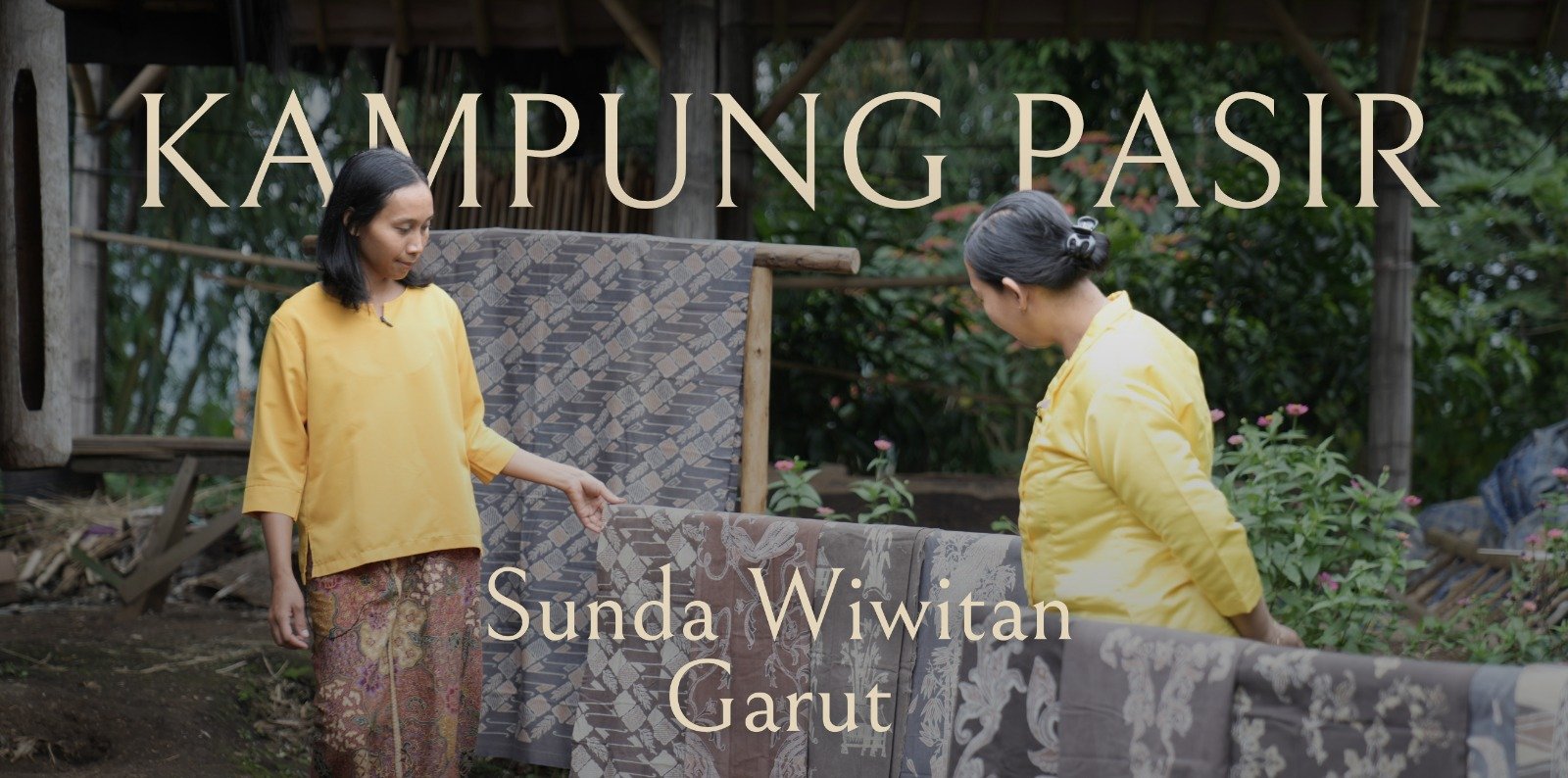
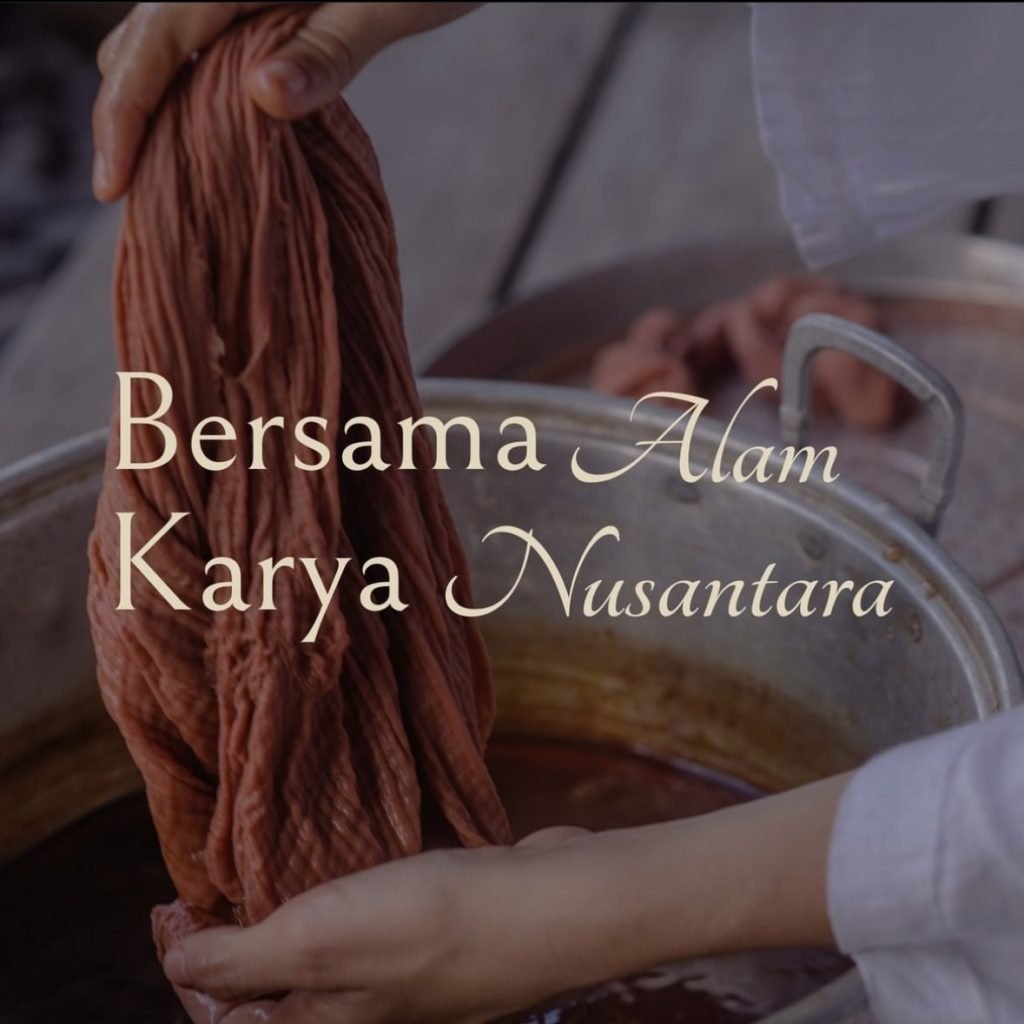
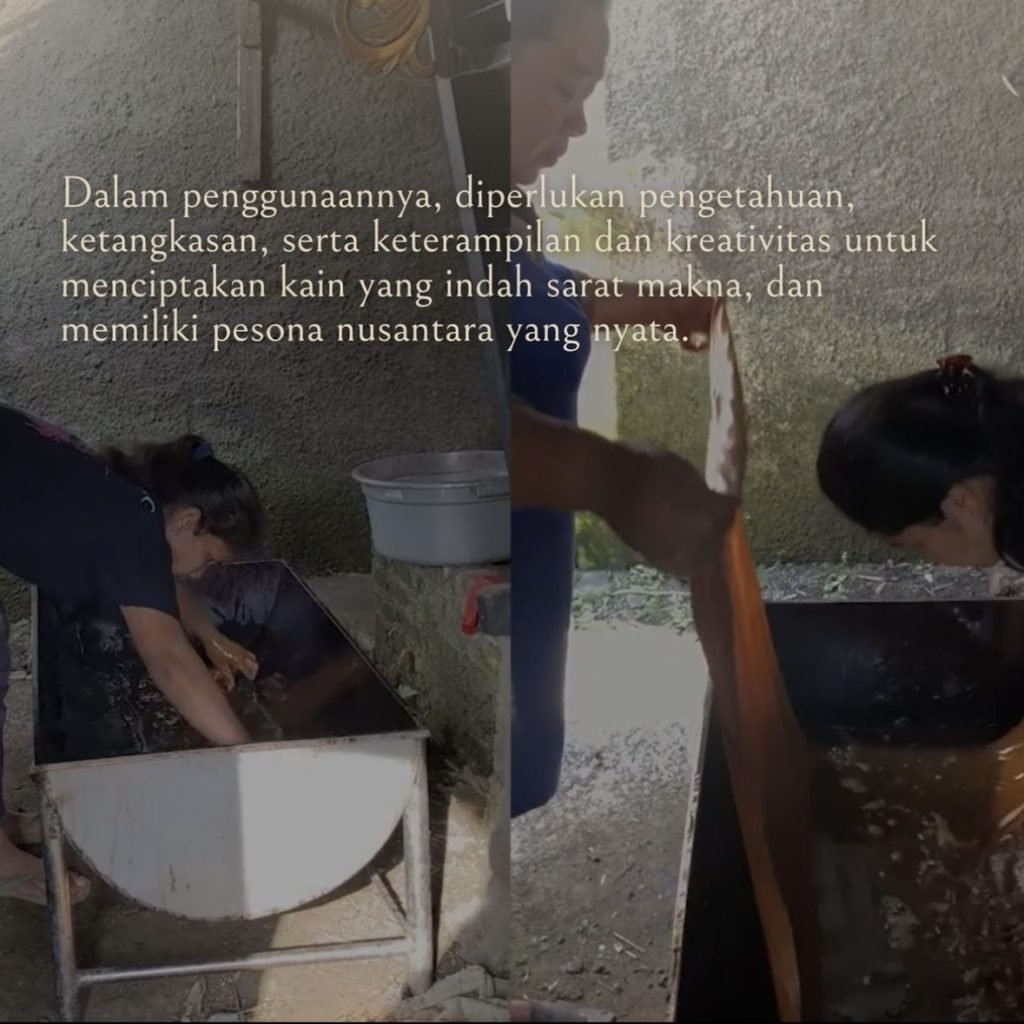
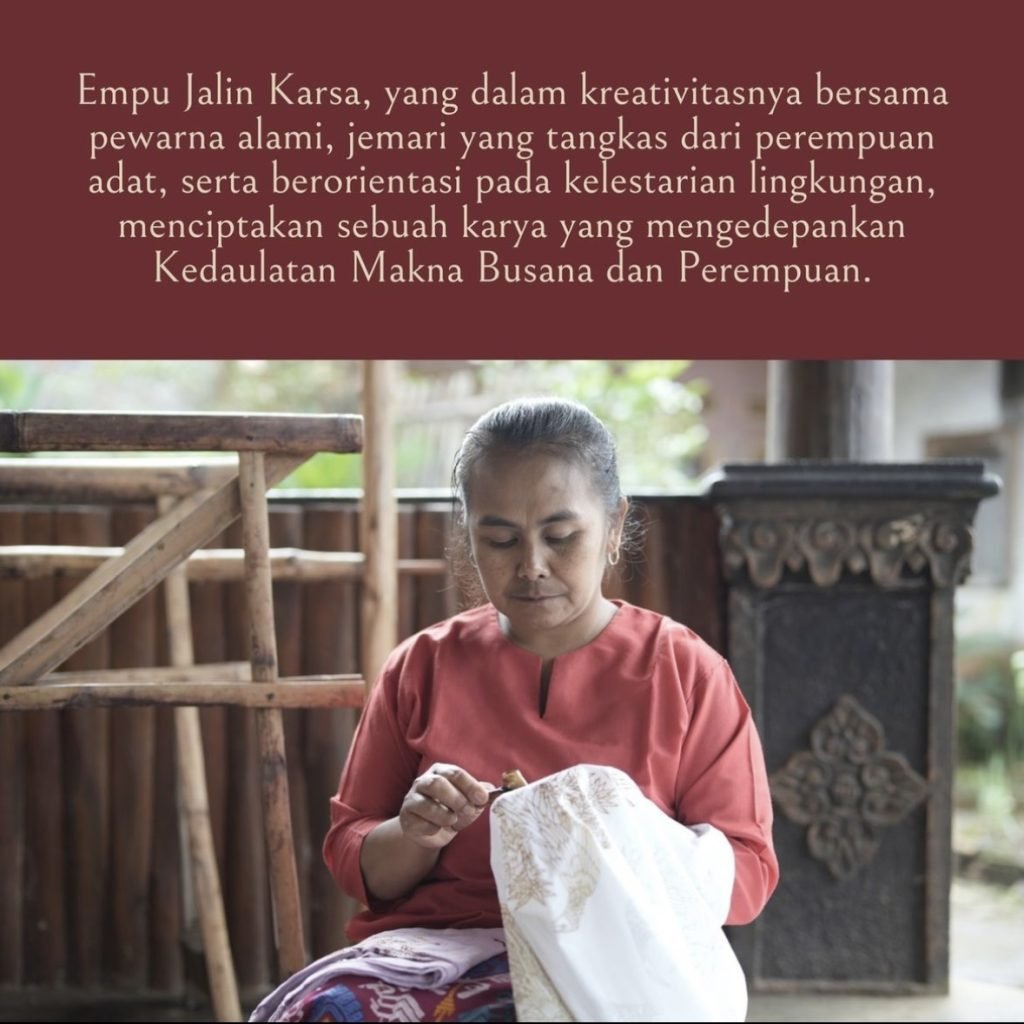
In Garut, Jalinka supported AKUR Sunda Wiwitan — an Indigenous women’s collective — to transition from synthetic dyes to natural dye practices in batik. The journey began with introducing eco-friendly dyeing methods and evolved into women mastering their own dye production using materials like onion skins and coconut husks. Today, they proudly call their craft “eco-village batik.” Jalinka co-developed the process by providing training, materials, soft skills sessions, and establishing the Sawung — a shared creative space. We also facilitated clean water access and continue to support the development of their Collective Mark.
Jalinka embraces natural dyes as part of our commitment to cultural preservation. Each piece honors the living heritage of Indonesia’s Indigenous traditions.
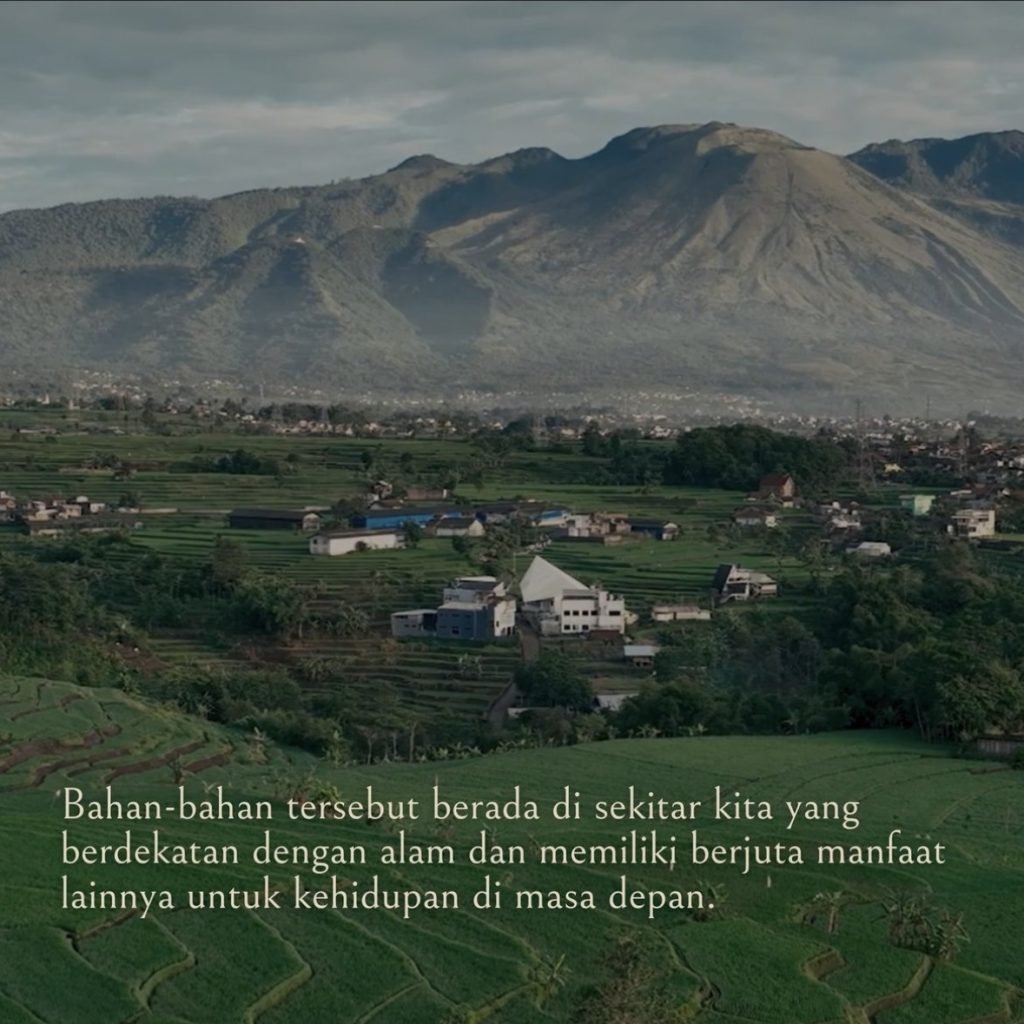
Drawn from the landscapes around us, these natural materials offer more than color — they embody living knowledge with enduring value for the health of our planet and the generations to come.
Drawn from the landscapes around us, these natural materials offer more than color — they embody living knowledge with enduring value for the health of our planet and the generations to come.
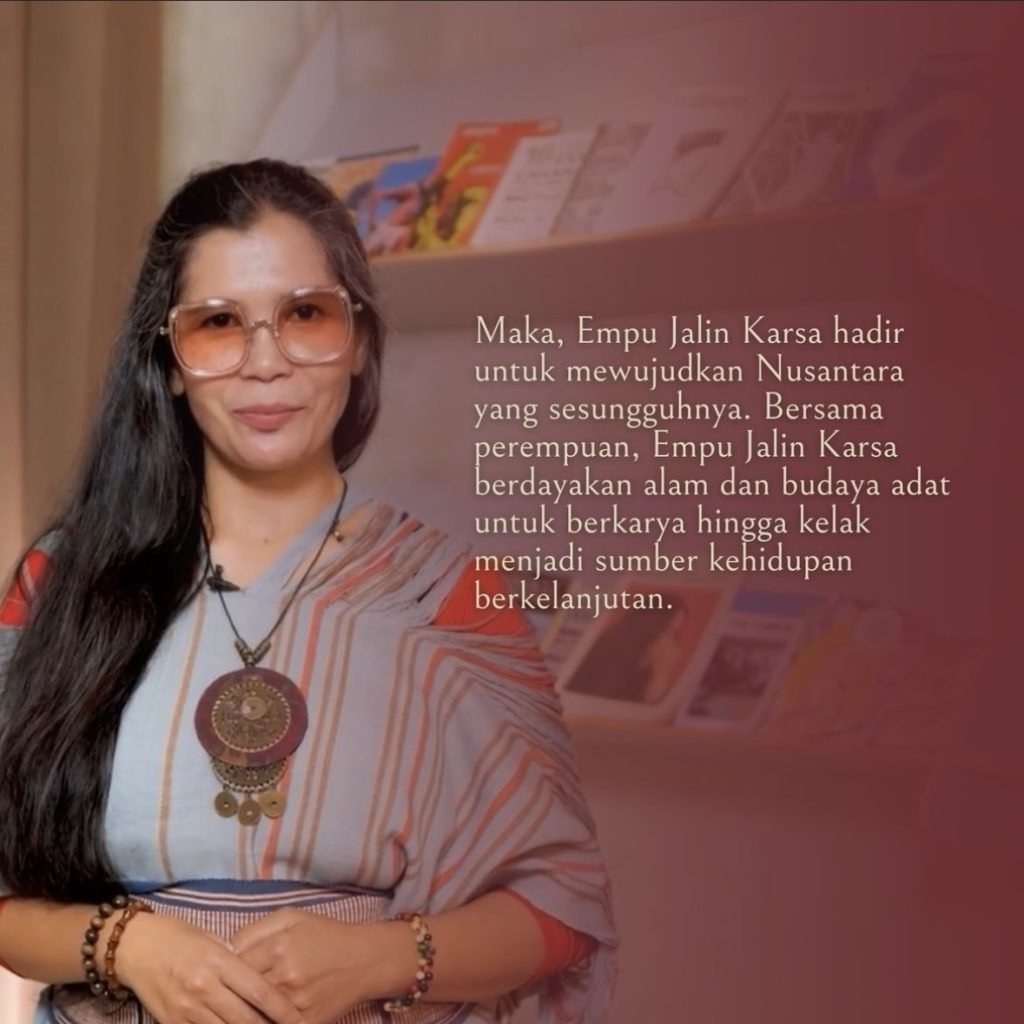
Jalinka was born from a vision of a thriving Nusantara — one that is empowered by women, sustained by youth and nature, and rooted in living cultural heritage as a pathway to enduring livelihoods.
This video was created by Veryanto Sitohang, Commissioner of Indonesia’s National Commission on Violence Against Women (Komnas Perempuan, 2020–2025), documenting a collaborative event with Empu Jalin Karsa (EJK). The event featured a public screening and discussion of “The Book of Life”, a documentary film produced by EJK that centers the voices, stories, and cultural knowledge of Indigenous artisan women.
The purpose of featuring Sunda Wiwitan women was to create a space where the artisans could stand before the public not as subjects, but as storytellers of their own living traditions. The film screening became a moment of recognition, agency, and intergenerational dialogue — where care, culture, and voice were reclaimed in full presence.
In this video, Sunda Wiwitan women artisans reflect on the importance of returning to nature — not as a trend, but as a commitment to future generations. Through their words, we hear a quiet strength: crafting with care, honouring the land, and upholding quality as a bridge to cultural exchange. Their reflections speak not only of making, but of remembering — restoring balance between people, place, and practice.
Their voices reveal a vision of global connection rooted in dignity. What they offer is not simply product, but presence — an invitation to see handmade work as a living dialogue. As we listen, we are reminded: knowledge shared with care can renew the world — not by scaling up, but by deepening our sense of relation.
Kampung Pasir, Sunda Wiwitan Community — Garut, West Java
In July 2022, a training process began to reintroduce natural dyes within the community. Over the course of one year, this evolved into a deeper journey of experimentation, skill-building, and strengthening their capacity to apply plant-based colors with confidence and cultural intention.
At Jalinka, garments are more than what we wear, they are expressions of place, memory, and purpose.
Each piece emerges from the hands of Indigenous women, colored with natural dyes drawn from the land, and shaped by stories that refuse to fade. In these threads, nature speaks, culture breathes, and the future is sewn, one motif at a time.
Beyond crafting hand-drawn batik with natural dyes, the women of the AKUR Sunda Wiwitan Indigenous community cultivate life in many forms. They tend gardens, work the rice fields, assist in mechanical repair work, co-run small shops alongside their husbands, and actively support cultural events and community rituals.
Their commitment to cultural preservation extends beyond textiles — they nurture living traditions by teaching children traditional dances, preserving local music, and sustaining communal practices that connect people to land and lineage. Through these everyday acts, they ensure that culture is not only remembered, but carried forward with joy, dignity, and shared purpose.
The decision to transition toward environmentally responsible batik was not an easy one. It required letting go of familiar practices and embracing slower, more demanding processes — all while navigating the realities of time constraints, market expectations, and production challenges.
Yet, the women of the community remain steadfast. Their commitment is not a trend, but a conscious choice to honor the land, preserve ancestral knowledge, and co-create a future where craftsmanship and care go hand in hand.
Every motif is more than a visual pattern — it carries stories, values, and ancestral wisdom passed down through generations. These designs are expressions of identity, memory, and connection to land and spirit.
When local government representatives visited the sawung — a community space supported by Jalinka — they were welcomed by the women of the AKUR Sunda Wiwitan Indigenous community.
Guided by these artisans, the visitors were invited to experience the art of batik firsthand, practicing the delicate technique of canting on white cloth. It was a meaningful moment that highlighted the crucial role of Indigenous women not only as makers, but as storytellers and cultural communicators, bridging tradition with new relationships.
📷 Photo courtesy of the Kampung Pasir community
All videos on this site are co-created within Jalinka’s IP Ecosystem of Care — respecting the creative rights of communities and collaborators.