Every piece carries a story. Every practice carries care.
This is how our journey grows: from roots to creativity, from creativity to regeneration.
Fom Upcycling Resistance to Solidarity in Motion
How Small Acts of Care Grew into a Movement for Recovery and Regeneration
Long before crisis came to define our lives, Empu Jalin Karsa (EJK), now known as Jalinka, had quietly begun its response to everyday challenges, through care, creativity, and conscious making.
1. Reclaiming Waste, Restoring Dignity
In December 2019, EJK launched its Climate Response and Upcycling Movement. What began as a simple act of transforming unused fabrics, vintage Indonesian textiles, and leftover materials soon evolved into something deeply intentional.
For EJK, upcycling was never just about sustainability. It was about recovery, about restoring dignity and honoring the life behind every material.
Each product was thoughtfully designed and ethically produced. Proceeds were used to pay tailors fairly, to purchase handcrafted textiles from vulnerable artisan groups, and to support programs for women survivors of violence.
In the hands of the community, upcycling became both a creative practice and a quiet resistance to a culture of waste. And EJK continues to nurture this creativity: ensuring that upcycling is not just about recycling materials, but also about regenerating livelihoods, skills, and cultural meaning.
2. Expanding Ethical Practices and Collective Collaboration
As this practice evolved, EJK expanded its efforts beyond products. It initiated environmental campaigns, encouraged ethical consumption, and created spaces for dialogue about responsible fashion rooted in social and ecological care.
This journey was never a solitary one. It grew through relationships, through trust, and through a shared commitment to regenerate not only products, but also lives, communities, and local knowledge.
3. Turning Crisis into Collective Action
When the COVID-19 pandemic struck, this growing ecosystem naturally transformed into a collective response. Alongside other key actors, EJK mobilized its networks and resources to act quickly and meaningfully.
In the midst of lockdowns and uncertainty, EJK took direct responsibility on the ground. It organized teams of tailors, managed hundreds of meters of material — from recycled Indonesian textiles sent by solidarity networks to newly sourced fabrics — producing thousands of cloth and medical masks while expanding its outreach through premium mask campaigns. EJK also played an active role in marketing and distributing these products across various communities and networks.
Selling premium masks was not only a sustainability strategy. It became a crucial way to fund the continued production of medical masks for healthcare workers and vulnerable communities. Every sale was reinvested to purchase medical-grade materials, ensuring that this solidarity movement could keep going and reach those who needed it most.
Many of these premium masks were also distributed for free to thousands of people within vulnerable communities, supported by grassroots distribution efforts across diverse networks of care.
4. From Mapping Realities to Piloting Change
Following this response, EJK deepened its commitment by conducting field assessments to explore both the challenges and opportunities faced by women-led creative economies. The assessments were carried out in Kupang, Sumba, and Garut, focusing on women artisans who have long been the economic backbone of their villages.
These assessments revealed multi-layered struggles — from economic precarity and limited market access to the lack of resources, funding, and eco-friendly production practices needed to address climate challenges and sustain their livelihoods.
Responding to these findings, EJK initiated its pilot support programs through self-funded efforts in their early stage. In Kampung Pasir, Garut, EJK worked closely with Indigenous women artisans to support their transition towards more environmentally friendly production practices.
This support went far beyond training. EJK helped provide basic creative infrastructure, including a modest open-air studio (sawung) that has since become a communal space for learning, working, and welcoming guests. EJK also brought in experienced facilitators, ensured that all materials were provided free of charge, and even opened access to clean water, not only to support natural dyeing processes but, more importantly, to meet the community’s most basic daily needs.
Most importantly, EJK ensured that every fabric produced during the workshops was respected and valued. These products were purchased directly by EJK, not as mere samples, but as meaningful expressions of evolving knowledge, creative growth, and living craftsmanship.
This collaborative journey remains ongoing. EJK continues to accompany the women artisans of Kampung Pasir in their learning process, nurturing their creativity, supporting their regenerative practices, and building pathways towards long-term sustainability.
Beyond the Mask
When Creativity Becomes Solidarity, and Small Acts Create Collective Impact
In April 2020, amid the uncertainties of the Covid-19 pandemic, what would later become Empu Jalin Karsa (EJK) responded with a quiet act of care: opening a space where creativity could meet resilience. Sewing cloth masks became more than a health response: it became a medium for learning, healing, and staying connected.
This early practice became a small catalyst that helped amplify the grassroots Mask for All movement in Indonesia, inspiring wider contributions and collective action. It began with creating premium cloth masks from leftover traditional textiles, pieces of Nusantara heritage that had long been kept in personal collections. These masks were designed for comfort and health resilience, using a three-layer method, including a soft cotton inner lining.
From this simple gesture, the initiative grew. Voluntary contributions of textiles from across Indonesia, sent by diverse communities and key figures: enabled the production of thousands of premium masks. Some were sold to help fund the production of medical masks, which were then distributed to over 90 remote health clinics (puskesmas) across Indonesia. Others were shared freely with vulnerable communities, in collaboration with various local actors and networks.
Within this journey, EJK’s young innovators also contributed their creative voice, producing doodle-art mask designs as part of this collective response.
Beyond the mask movement, EJK-Jalinka’swork during this period extended to crafting small-batch products from personal collections of traditional textiles and original doodle-art pieces. Part of the proceeds, in selected months between 2021 and 2022, were dedicated to supporting programs for women survivors of violence, through partnerships with Pundi Perempuan and Indonesia untuk Kemanusiaan (IKa), the Indonesian for Humanity Foundation.
This was one expression of EJK’s broader journey: where creativity became a form of solidarity, and where threads of connection were woven through care and collaboration. It affirmed our belief that even in times of rupture, creation can still take root, and that every act of making can carry meaning, resilience, and collective hope.
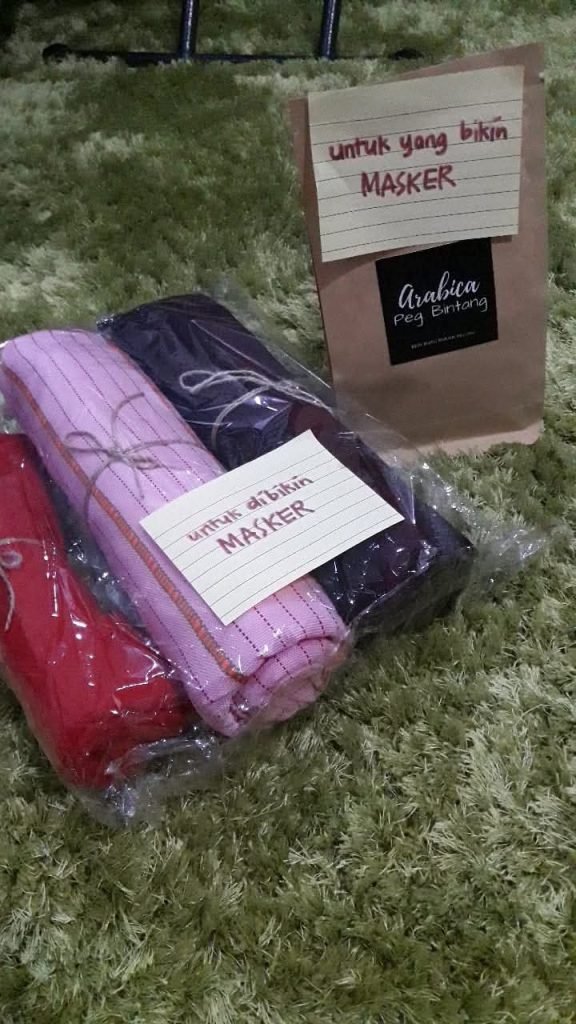
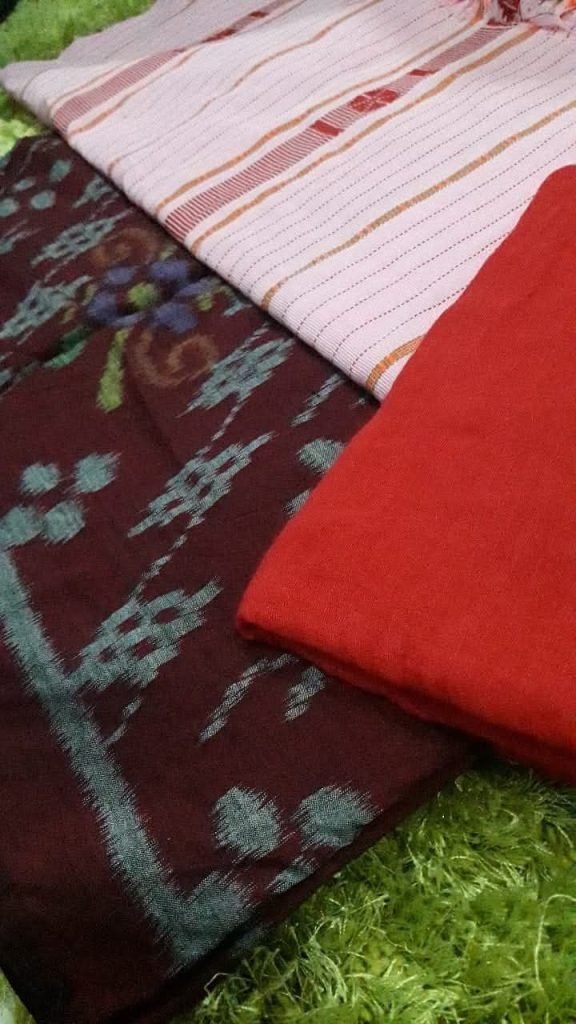
Among hundreds of Nusantara textiles contributed by various communities and individuals to support the Mask for All movement, these are just two examples of the fabrics that carry stories of care and solidarity.
One of the contributors, who sent her treasured textiles for the Mask for All movement and to help fund the production of medical masks for remote health clinics, left a quiet note with her package.
In her words — “This larger bundle is for funding medical masks. And this small pouch is a little gift, especially for the mask makers (EJK).”
A simple gesture that speaks volumes. Not just solidarity for those in need, but also care for those who cared. Quiet, humble, and deeply moving.
To explore more, click the Solidarity Action button to view photos of products created during the COVID-19 response. These works were part of a broader collective effort, where proceeds supported both pandemic relief initiatives and programs for women survivors of violence.
Artefacts of Care Practice
Regeneration has always been part of how we create, connect, and care. In Jalinka, making has never been separated from repairing, reusing, or honouring what already exists. Every thread carries a story. Every design holds a memory.
These early works are reflections of that living practice: shaped by resilience, solidarity, and the quiet creativity of youth during uncertain times.
Each doodle was hand-drawn by Fata Mallika Zain, a young visual storyteller. The raw sketches were thoughtfully transformed into wearable designs by Fayyaz Mullana Zain, turning these artworks into everyday gestures of connection, care, and collective hope: shared openly during the early days of the pandemic.
Original doodle artworks by Fata Mallika Zain within Jalinka’s Circular Youth Lab. Digitally crafted by Fayyaz Mullana Zain. Created and shared as part of Jalinka’s ongoing practice of collective care and creative storytelling.
Stitching Hope, Weaving Solidarity
The Early Days of the Mask for All Movement in Indonesia
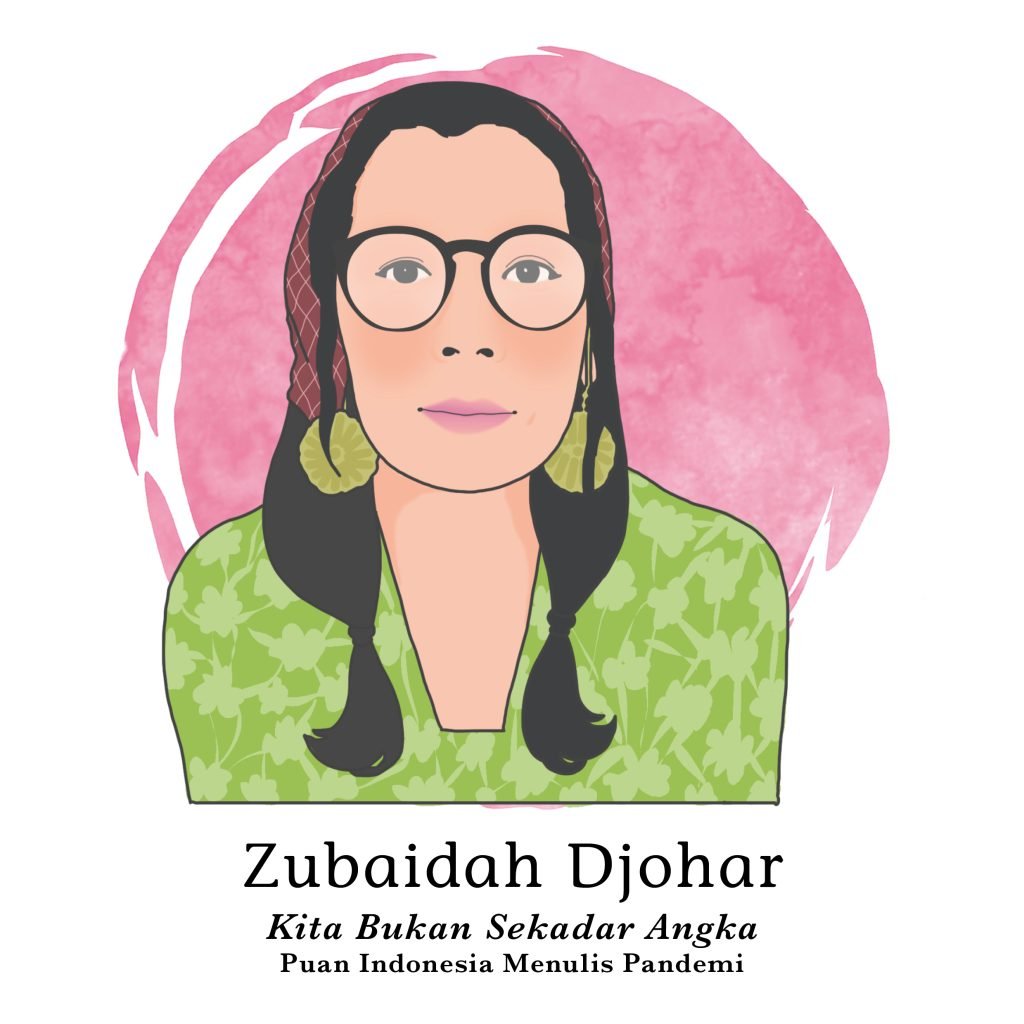
More than a response to crisis, this is the story behind the early days of the Mask for All movement in Indonesia — where fashion, care, and solidarity came together at the heart of a grassroots community movement.
Through this article, Zubaidah Djohar, founder of Empu Jalin Karsa (Jalinka), traces the humble beginnings of the Mask for All initiative during the pandemic. It reveals not only how creativity became a tool for survival, but also how networks of women, artisans, and social actors mobilized together — turning leftover fabrics into symbols of dignity, action, and shared humanity.
What began as a simple act of care soon grew into something larger, a collective ecosystem of solidarity and action. Learn more about how this movement evolved through collaboration, creativity, and shared responsibility.
→ Read the Full Story
A Space to Create, A Space to Care
EJK opened a sewing space for young people with Down syndrome, a small but meaningful place to learn, create, and grow together. It was never just about sewing masks, but about creating moments of joy: reading poetry, dancing together, and celebrating courage in the midst of uncertain times.
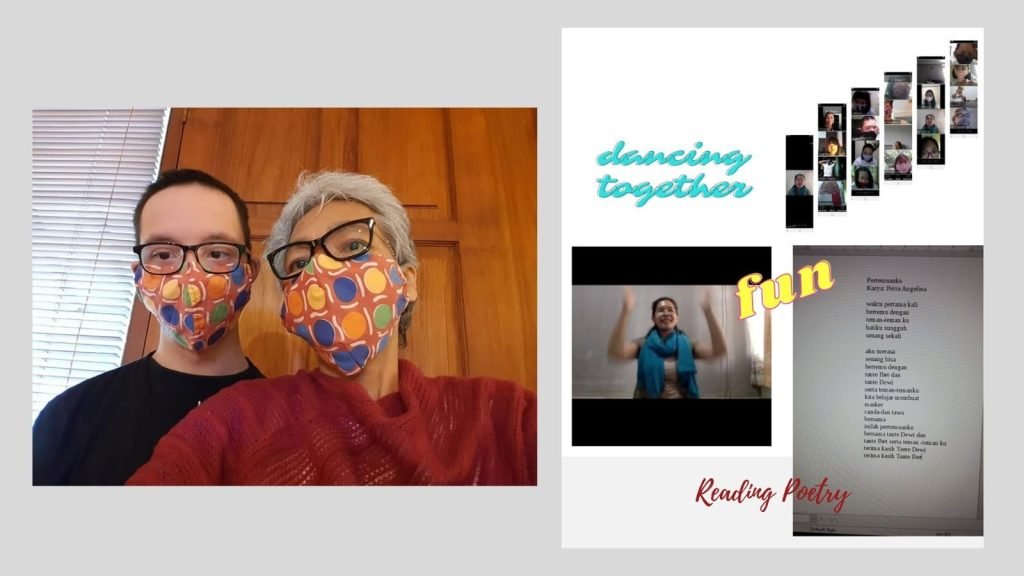
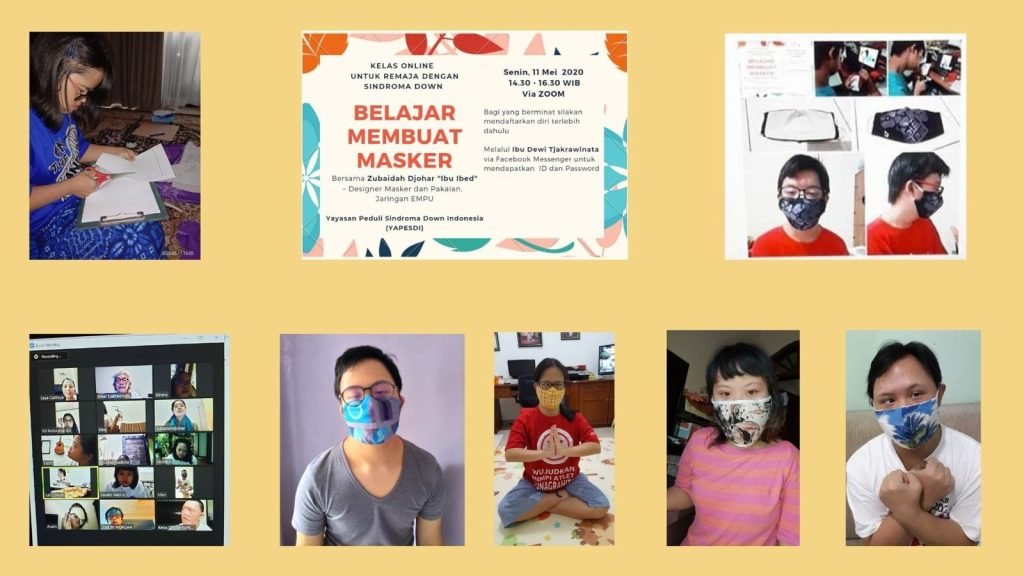
Photo of YAPESDI is used with permission and shared as part of Jalinka’s ethical IP ecosystem.
The Threads We Stitch
We are not what disaster left behind, but threads quietly mending hope. From our small hands, masks were born
not just to breathe, but to say: we can.
We danced in tight corners, opening worlds wider than the room. We learned not only techniques, but the courage to stand, in rhythms we made our own.
If the world once turned its silence on us, this is our voice.
Not just words but a life choosing to rise, again and again.
~ Dedicated to the young creators of Mask for All
in loving collaboration with YAPESDI ~