Tenun Collection: Sumba Threads of Continuity
Explore the textures and traditions of tenun — Indonesia’s rich handweaving heritage rooted in place, identity, and memory.
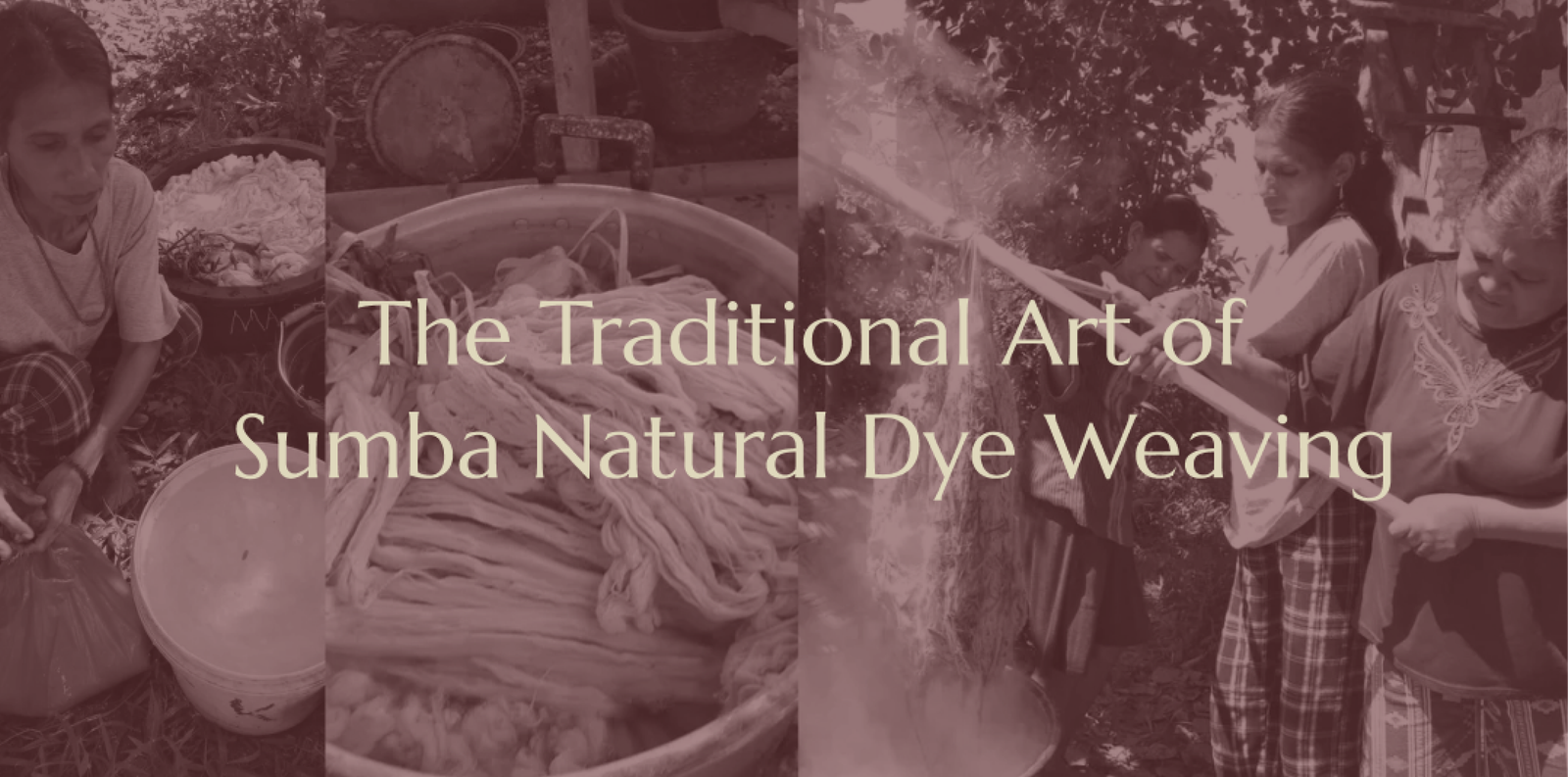
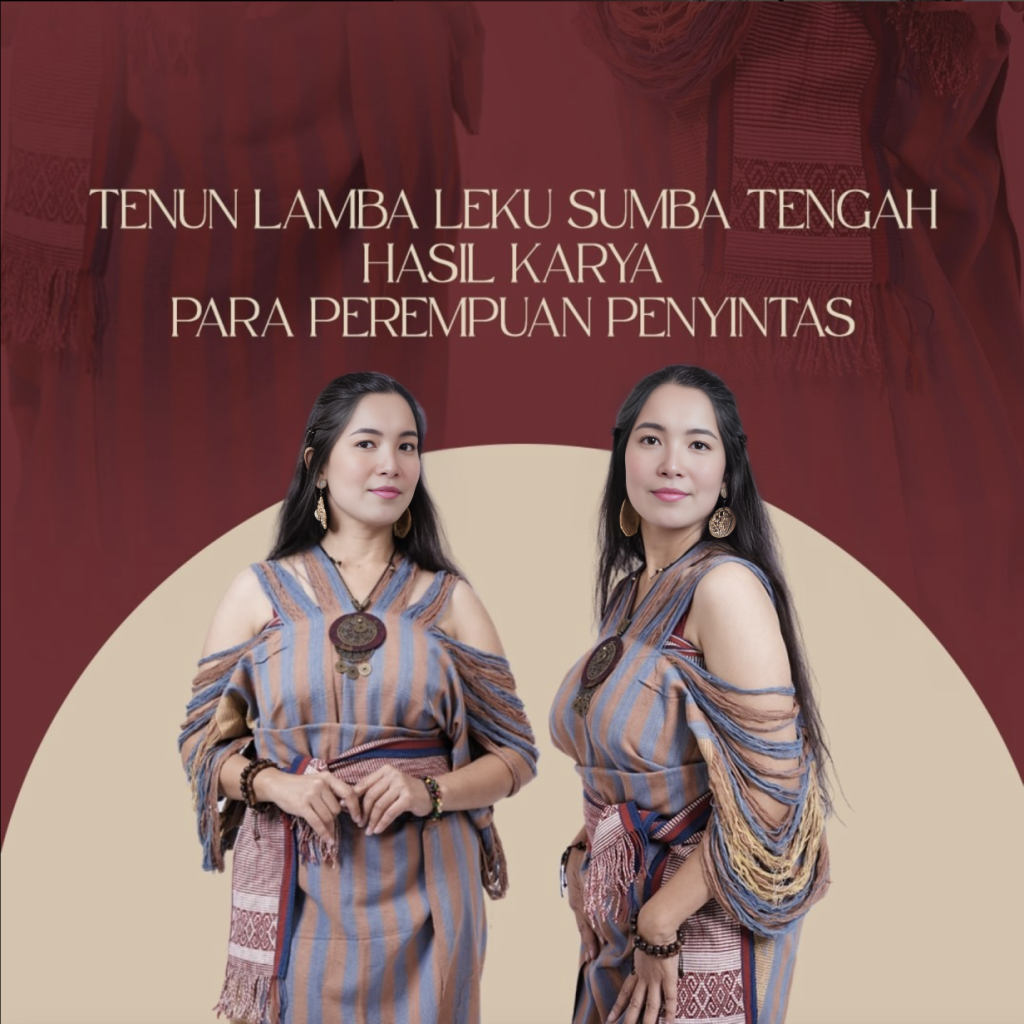
This collection features woven pieces made by women weavers in three regions of Sumba, where Jalinka supported a phase of their creative journey through the provision of natural dye materials, weaving supplies, and local mentorship.
In West Sumba, we contributed to strengthening natural dye practices through direct material support and collaboration with a local trainer. In Central and East Sumba, our assistance focused on providing yarns and plant-based dyes to sustain long-standing natural weaving practices passed down through generations.
This initiative was strengthened in part through the involvement of Tugu Pratama, whose support helped enable several aspects of its implementation.
Overall, this initiative was not only about providing materials, but also a form of solidarity with communities that have long been disconnected from dominant economic flows, limited in access to funding, and often overlooked in broader support systems, including access to markets.
As women and as weavers, they face layered challenges — from invisible domestic burdens and limited access to technology, to the lack of recognition for the cultural and economic value of their inherited skills. Jalinka stands in solidarity to help amplify their voices and support more just and regenerative livelihoods.
Sumba Woven Duality — Threads of Healing and Heritage
A tapestry of strength, spirit, and sacred harmony.
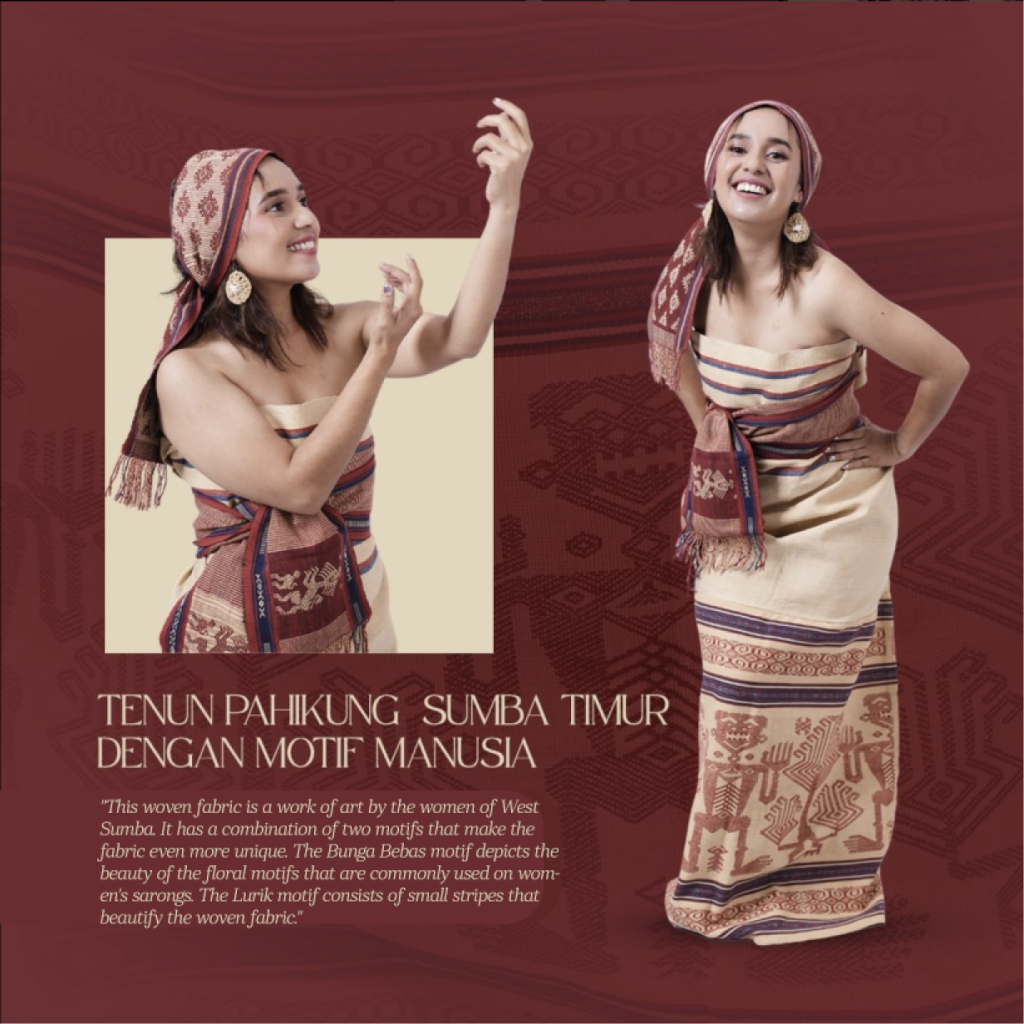
This piece unites two sacred worlds of Sumba. The base textile, handwoven by women survivors in Central Sumba, carries hues of brown, cream, and faded blue — evoking serenity, emotional healing, and quiet strength. It is a fabric of recovery, with every thread woven in resilience.
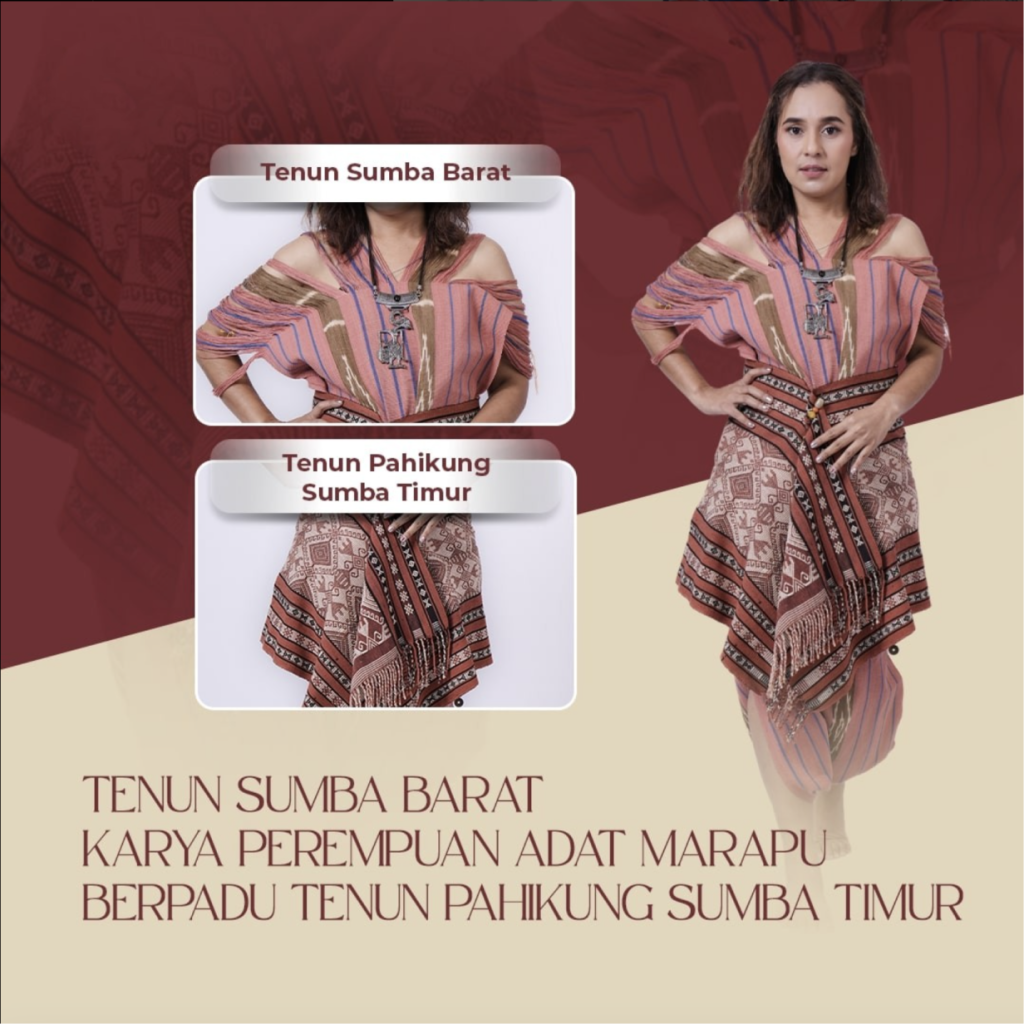
Layered on the waist and head is the Pahikung from East Sumba, created by the indigenous Marapu community. Its bold human motif reflects innocence and solitude — a spiritual resistance to harm. The Mahang lion motif, drawn from colonial imagery, is reimagined as a symbol of cultural endurance and ancestral protection.
Together, these textiles form a living story — of trauma rethreaded into beauty, of sacred traditions held strong, and of women who weave both memory and meaning into the world.
✨ Worn with purpose. Crafted with soul.
Sumba Woven Duality — Threads of Healing and Heritage
A tapestry of strength, spirit, and sacred harmony.
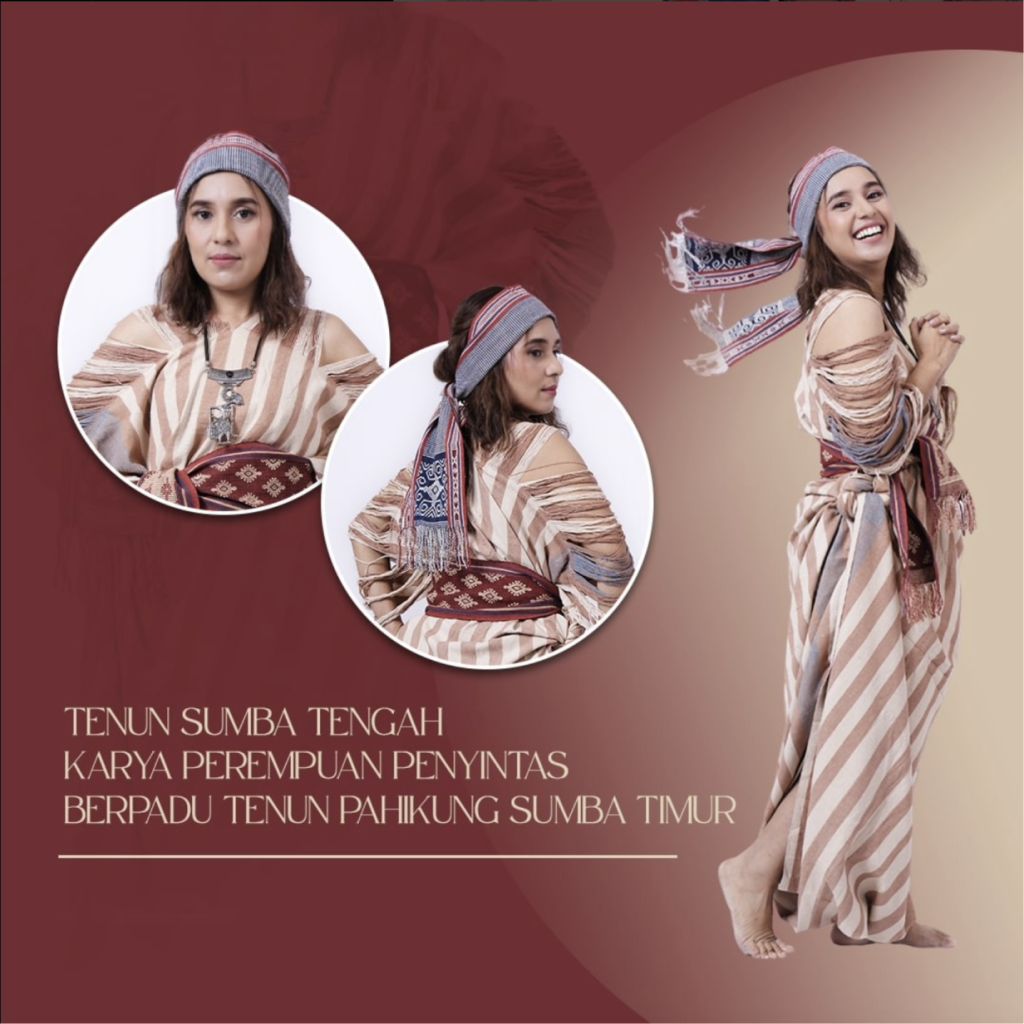
This piece brings together two worlds of Sumba: the central and the eastern, the personal and the ancestral, the healing and the sacred. The model wears a handwoven fabric from Central Sumba, crafted by women survivors — each thread a quiet act of resilience. The blend of earthy browns, gentle creams, and faded blues whispers peace, embodying the emotional landscape of recovery and hope.
Wrapped around the waist and adorned on the head is the Pahikung fabric of East Sumba, woven by the indigenous Marapu community — guardians of ritual, tradition, and the cosmic balance of life. Its bold motifs speak of protection, identity, and the sacred rhythms of ancestral memory.
Together, these two fabrics tell a powerful story: of trauma transformed into beauty, of tradition standing unshaken, and of women as both creators and carriers of culture.
This is not just a garment — it is a layered statement of rebirth and reverence.
✨ Worn with purpose. Crafted with soul.
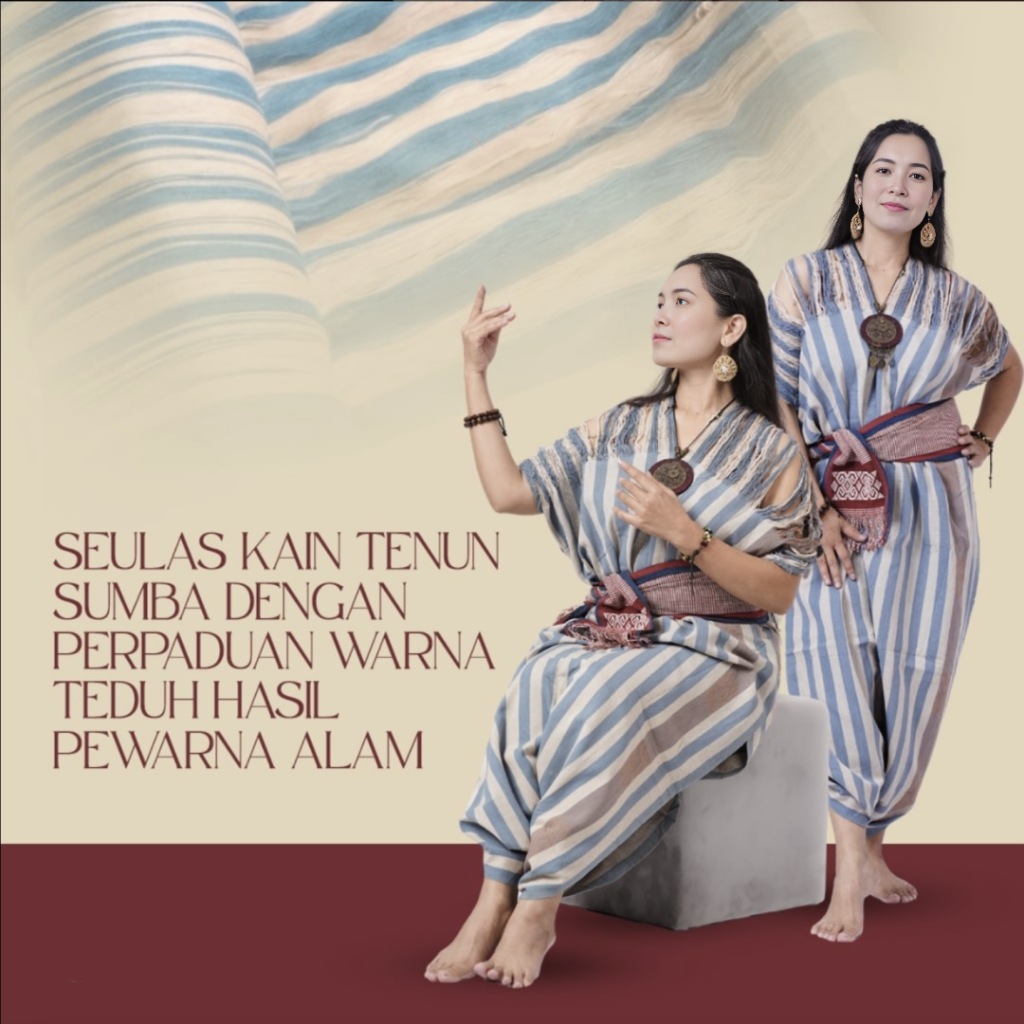
Harmony in Threads — Woven by Women, Dyed by Nature
This textile is a collaboration of two powerful lineages of Sumba — woven by women survivors of violence from Central Sumba, and completed with a Pahikung belt created by Marapu indigenous women from East Sumba. Together, they carry a story of healing, identity, and ancestral strength.
The base fabric features a striped motif in faded blue and cream, hand-dyed using traditional plant-based techniques. The soft blue comes from suji leaves, invoking calm and clarity, while the warm cream is extracted from mahogany bark, grounding the piece in the wisdom of the forest.
Worn around the waist, the Pahikung woven belt adds boldness and spirit. Crafted by Marapu weavers, it symbolizes protection and sacred connection to ancestry. Each motif reflects layers of belief — from resistance to evil to the enduring presence of the human spirit.
This piece is more than textile — it is a woven offering of resilience and reverence, handcrafted by women who carry both memory and meaning.
✨ Crafted with care. Rooted in tradition. Empowered by women.
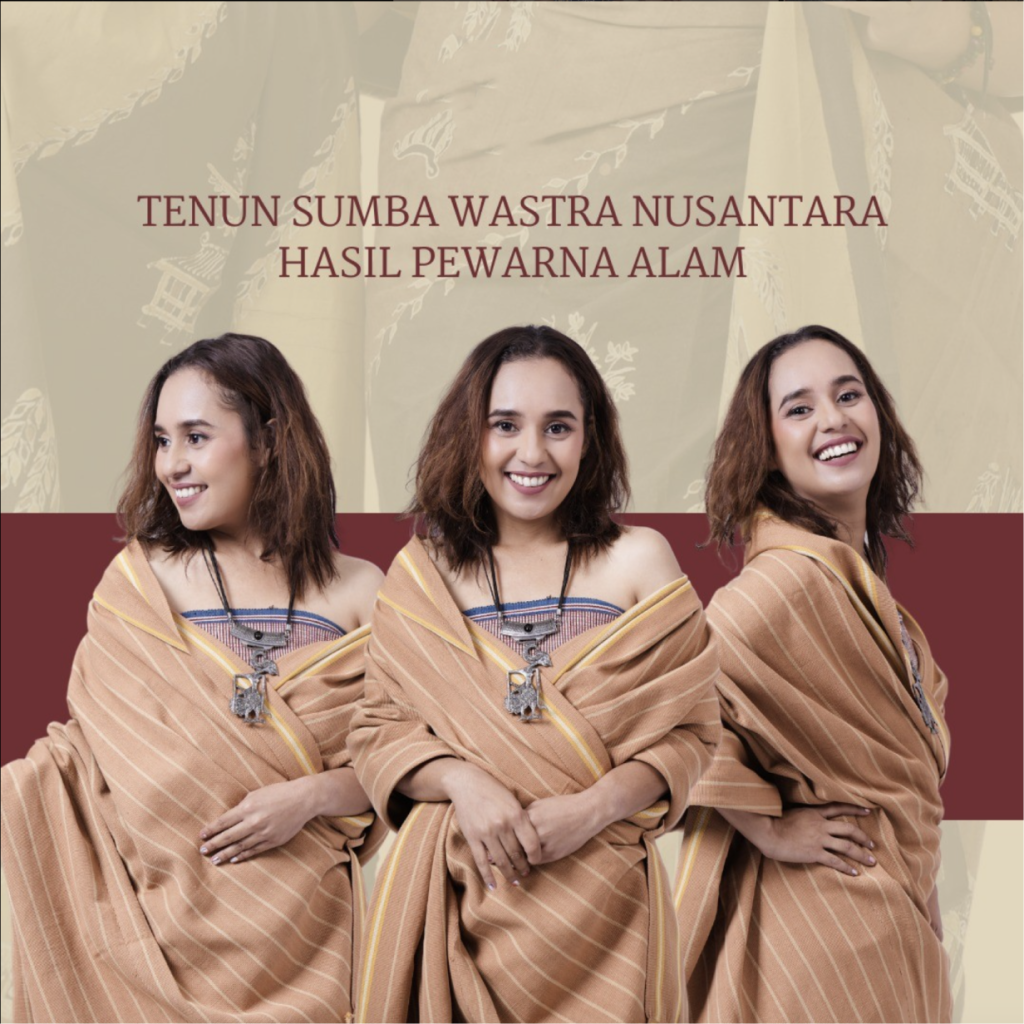
Sun-Warmed Harmony — Naturally Dyed Sumba Weave
A celebration of nature’s palette and ancestral craftsmanship, this Tenun Sumba piece features a striped motif woven with elegance and care. The fabric’s golden-yellow tones are extracted from a sacred blend of idu wood, ketapang root, and mengkudu root — each plant bringing its own character to the dyeing process. The result is a soft yet radiant yellow, rich in earth’s natural pigments and deeply rooted in indigenous botanical knowledge.
Paired with the gentle brown tones derived from mahogany wood bark, the color harmony evokes warmth, balance, and grounded beauty. Mahogany, known for its fine textures and color depth, lends not only warmth but also a sense of organic refinement to the textile.
The striped motif, running through the fabric, offers more than visual rhythm — it represents continuity, connection, and cultural identity. Each line carries intention, each shade holds memory.
This textile is more than just color and cloth. It is a story told through leaves, roots, and hands — woven by women who carry the tradition of the land and dye their craft with wisdom.
✨ Naturally beautiful. Authentically crafted. Timeless in every thread.
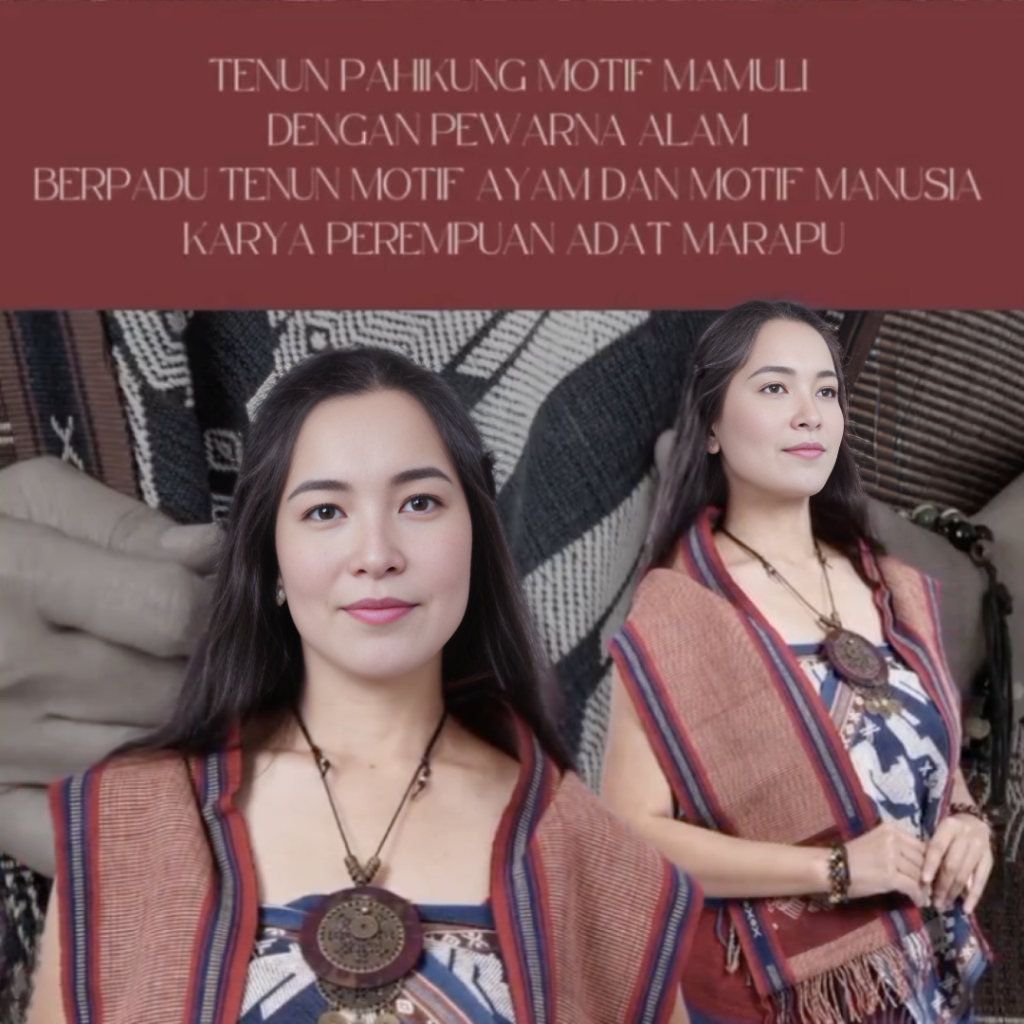
Pahikung of Life — Symbols Woven in Spirit
This exquisite Pahikung woven fabric from East Sumba features sacred motifs that speak to the heart of Sumbanese cosmology. The Mamuli motif, placed on the upper garment, represents the womb — a powerful symbol of life, fertility, and the revered role of women. With its iconic form resembling the female reproductive organ, Mamuli honors women’s vital presence as life-givers and custodians of continuity.
On the sarong, the chicken motif embodies awareness, protection, and leadership, while the human motif reveals layers of vulnerability — innocence, fear, and solitude. These symbols are more than decorative; they are visual philosophies that express collective values, ancestral teachings, and the emotional depth of daily life and ceremony in Sumba.
Together, these motifs create a textile that is not only beautiful but deeply meaningful. Every thread is a testament to cultural identity, feminine strength, and spiritual guidance — woven by hands that carry the wisdom of generations.
. ✨ Worn with reverence. Honoring life through every motif
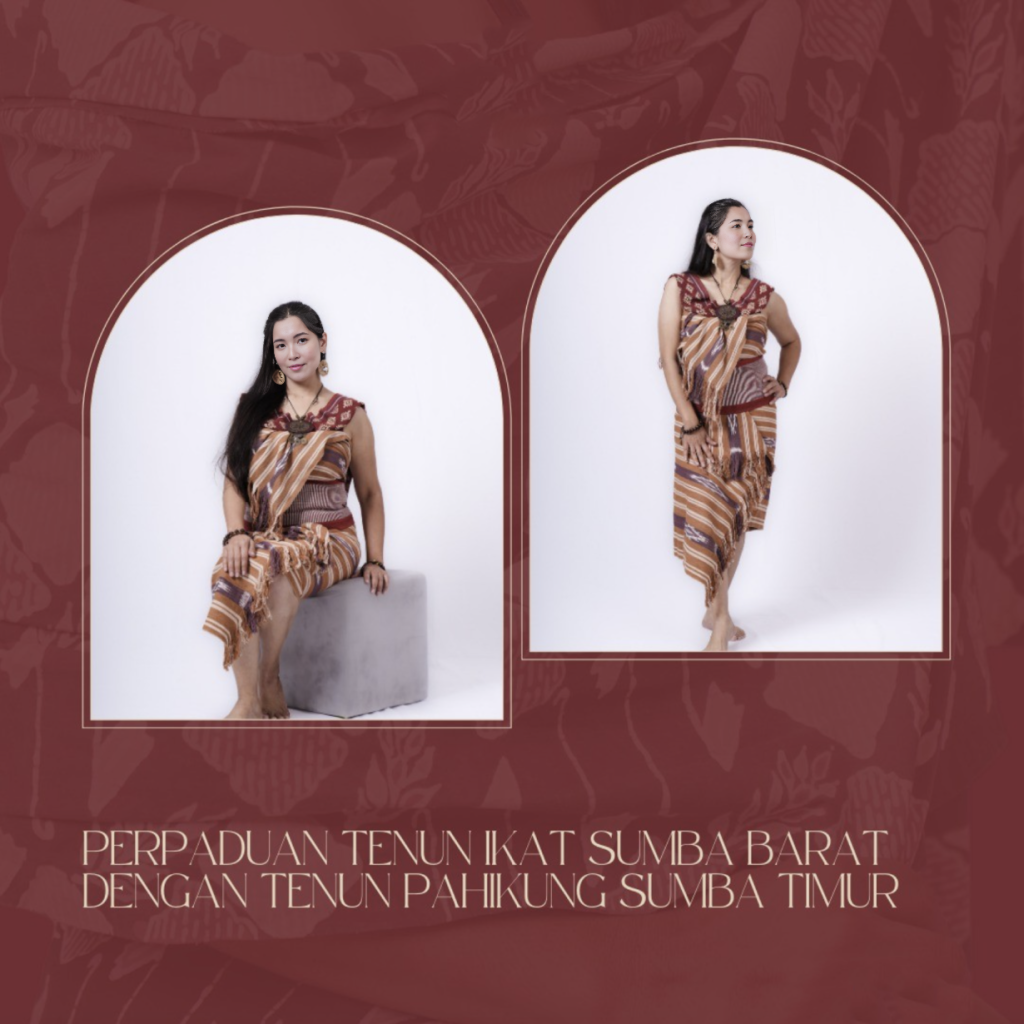
Pathways of Sumba — A Journey Woven in Threads
This handwoven ikat fabric from West Sumba is dyed using natural materials sourced from the island’s rich landscape. Its diamond-shaped pattern carries deep cultural meaning — symbolizing the tradition of Sumbanese people who always bring provisions on their journeys, whether hunting in the forest, working the land, or traveling afar. It reflects a life philosophy of preparedness, resilience, and connection to the land.
Paired with the Pahikung fabric of East Sumba, known for its ceremonial motifs and spiritual symbolism, this ensemble creates a striking visual dialogue between two weaving traditions. While West Sumba speaks of movement and sustenance, East Sumba embodies protection, identity, and sacred femininity through its bold motifs and intricate techniques.
Together, these textiles reflect the cultural diversity of Sumba — a meeting of journeys and rituals, of daily life and spiritual reverence. Each piece is more than just fabric; it is a narrative of heritage woven by the hands of women who keep stories alive through color, pattern, and tradition.
Resilient Beauty — A Tapestry of Survival and Tradition
This woven fabric from Central Sumba is crafted by women survivors, embodying strength, healing, and patience in every thread. The deep brown and blue tones, derived from natural dyes, reflect a grounded and contemplative spirit. Complemented by a Pahikung weave from East Sumba wrapped around the waist, the piece highlights Sumba’s rich cultural diversity. The combination of textures, colors, and symbolic heritage creates a meaningful statement—where resilience meets ritual, and tradition is carried forward by the hands of women.
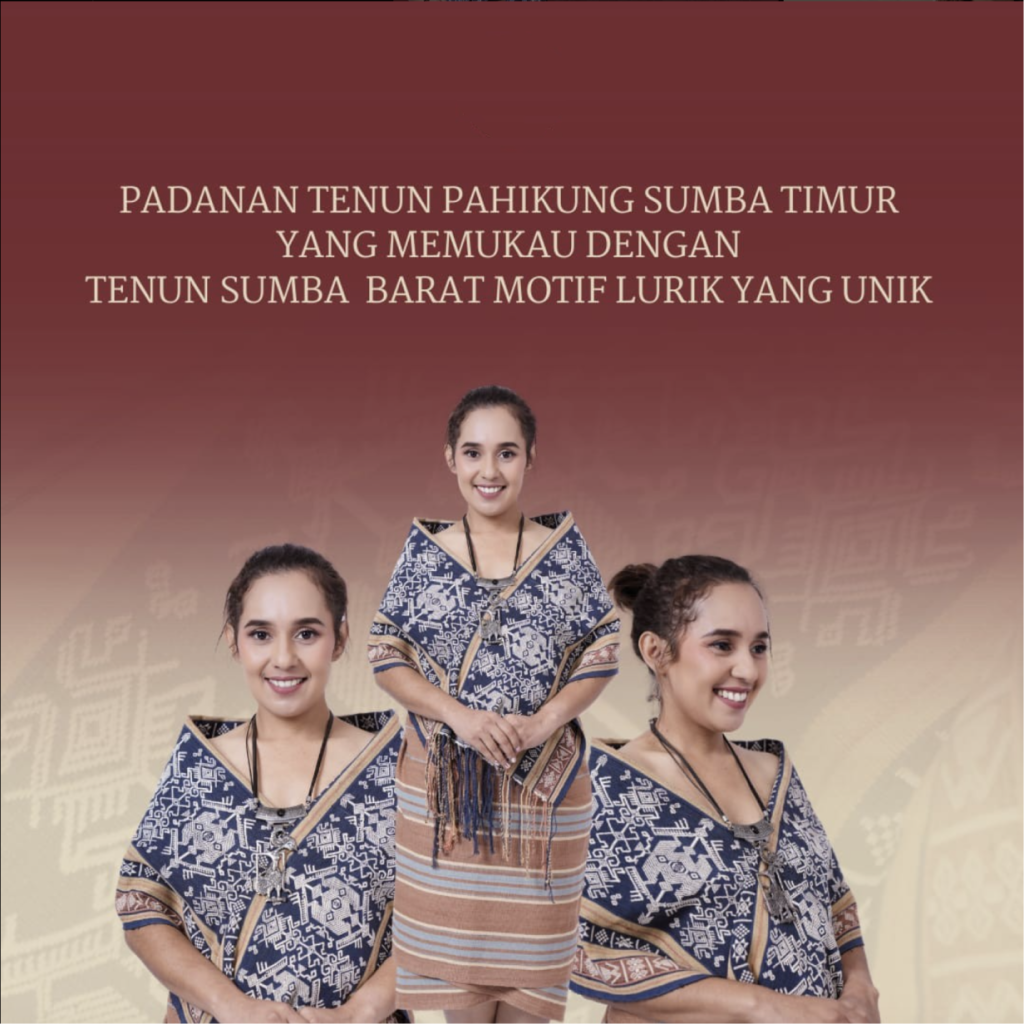
This piece brings together the refined complexity of Pahikung weaving from East Sumba with the grounded rhythm of striped (lurik) motifs from West Sumba, creating a dialogue between ceremonial symbolism and everyday resilience. Pahikung, with its intricate patterns and ancestral meanings, reflects protection, identity, and sacred lineage, while the West Sumba lurik motif — often dyed with natural pigments — embodies simplicity, continuity, and the pulse of daily life. United in one composition, these textiles celebrate the diversity of Sumba’s heritage, handcrafted by women whose artistry carries both memory and purpose.
Colors of the Earth — A Harmony of Nature and Heritage
This woven fabric features delicate diamond-shaped motifs and a harmonious blend of pink, brown, and blue hues, all derived from natural dyes rooted in local botanical wisdom. The soft pink is extracted from kadara wood, the warm brown from mahogany bark, and the calming blue from the leaves of the suji flower — each color carrying the essence of the land. Wrapped around the waist is an intricate Pahikung weave from East Sumba, adding ceremonial depth and visual contrast. Together, they form a piece that honors the intimacy of nature, the symbolism of tradition, and the quiet strength of women who bring these textiles to life.
Earth-Dyed Serenity — Crafted by Marapu Women
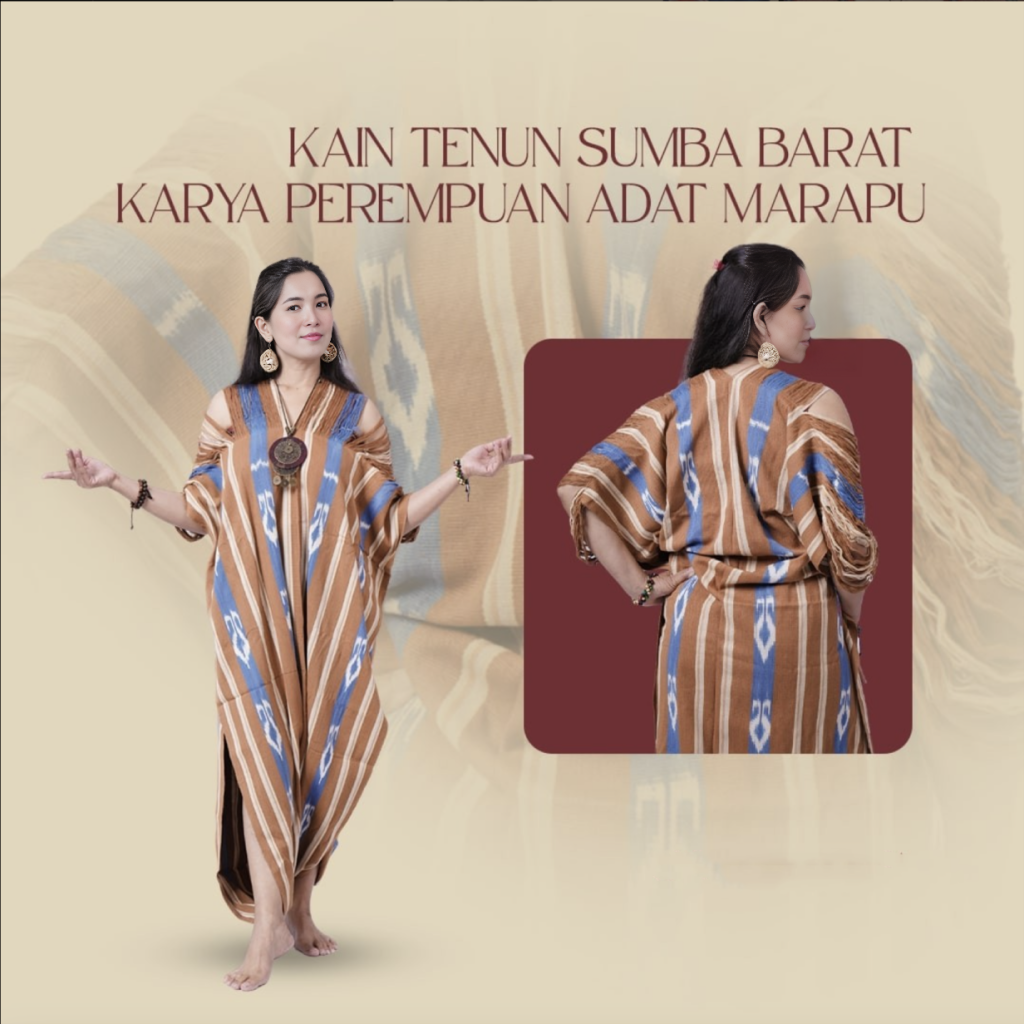
This woven fabric from West Sumba is the artistic expression of indigenous Marapu women, combining faded brown and light blue tones created through natural dyeing techniques passed down through generations. The warm brown is drawn from mahogany wood bark, while the gentle blue emerges from the leaves of the suji flower, reflecting a deep connection to the environment and ancestral knowledge. Every strand is a quiet celebration of sustainability, identity, and the creative spirit of women who weave culture into every thread.
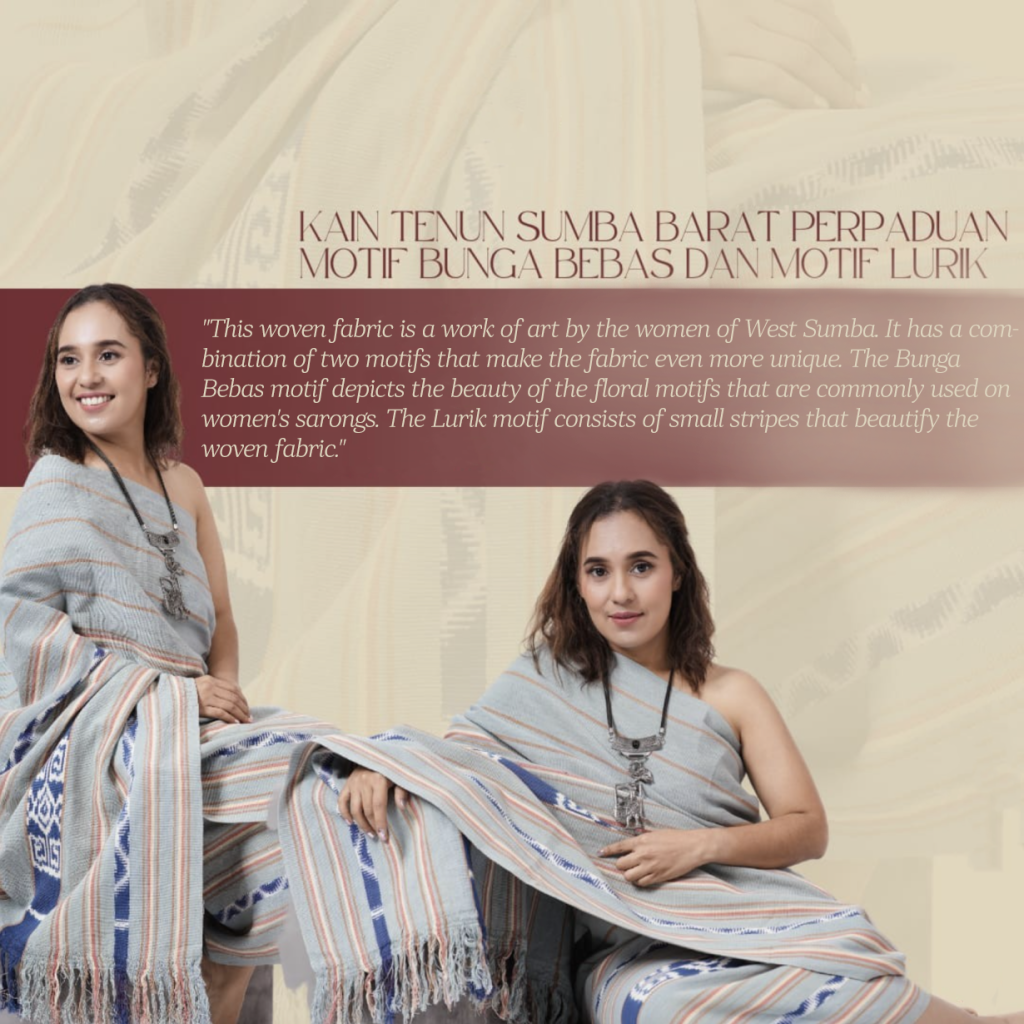
Living Patterns — Grace and Rhythm in West Sumba Weave
This distinctive woven fabric from West Sumba blends tradition and beauty through a combination of motifs that carry deep cultural meaning. The fabric worn by the model pairs a free-flowing floral motif, traditionally designed for women’s sarongs, with the classic lurik (striped) motif, composed of fine, rhythmic lines that add texture and balance. Dyed using natural pigments, the fabric’s colors speak softly of the earth, while its motifs reflect both the fluid grace of femininity and the structured rhythm of daily life — woven into one harmonious expression of heritage.
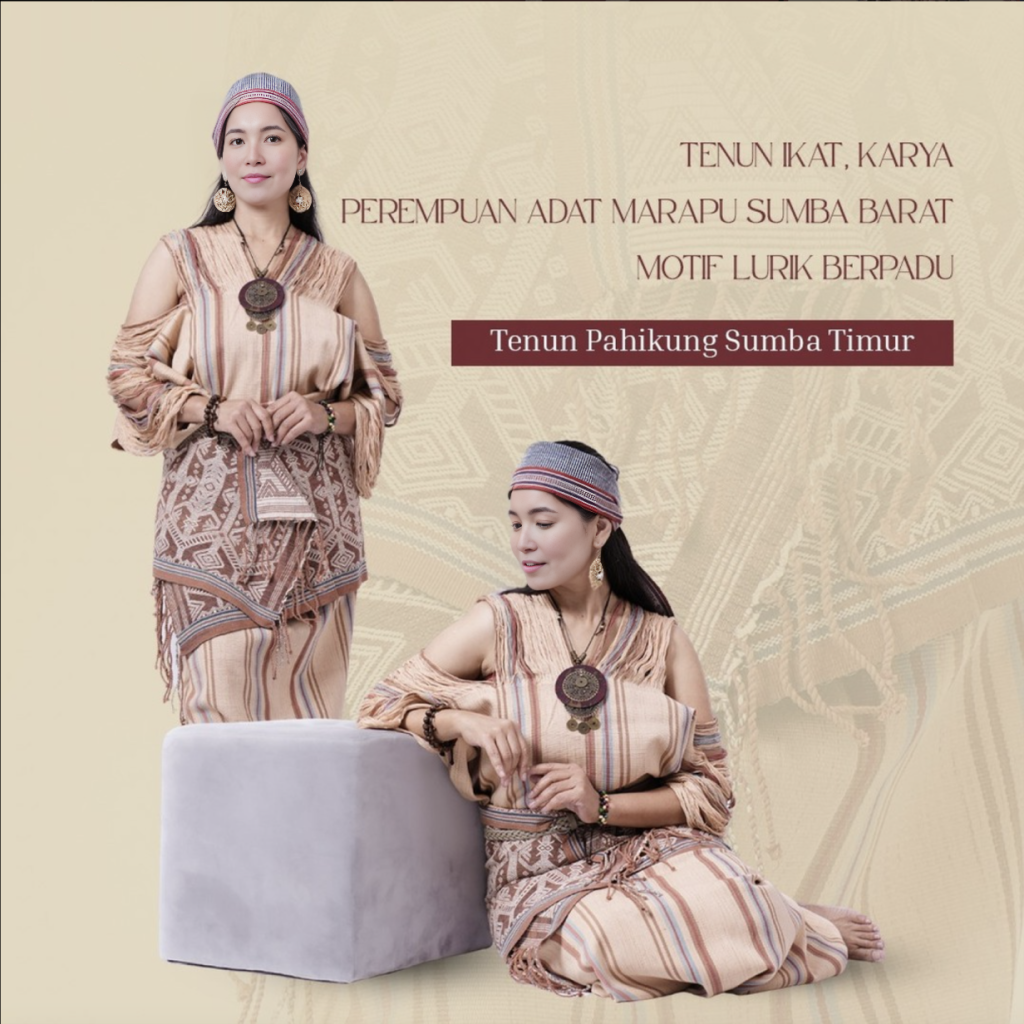
Threads in Harmony — Where Nature Meets Heritage
The model wears a West Sumba woven fabric featuring a striped pattern in soft cream and faded blue, naturally dyed using suji flower leaves for the blue tone and mahogany wood bark for the cream hue. The serene palette reflects a deep connection to the earth and ancestral dyeing traditions. Complementing this is a Pahikung woven fabric from East Sumba, elegantly wrapped around the head and waist, adding ceremonial depth and symbolic richness. This thoughtful pairing reflects not only Sumba’s textile diversity but also a harmonious blend of nature, culture, and feminine resilience woven into every thread.
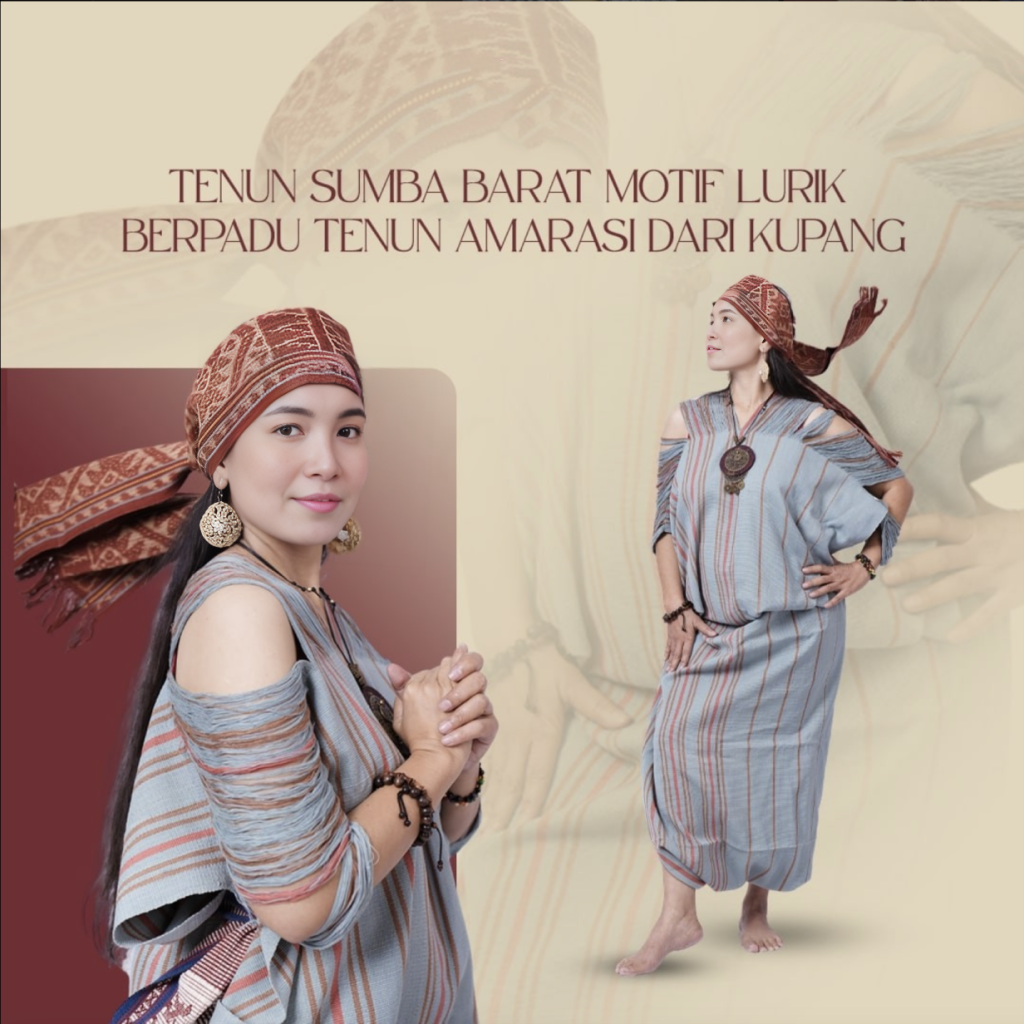
Rooted Radiance — Colors of Care and Craft
This captivating woven fabric from West Sumba features a graceful combination of faded blue, brown, and pink in a lurik-striped pattern that reflects both harmony and movement. The colors are extracted through traditional natural dyeing methods: suji flower leaves for the soft blue, mahogany bark for the grounding brown, and kadara wood for the warm pink hue. Tied around the model’s head is a woven textile from Amarasi, Kupang, adding a distinctive touch from East Nusa Tenggara. Together, these elements represent more than aesthetic beauty — they embody the strength of women as nurturers of nature, creators of culture, and providers for their communities.
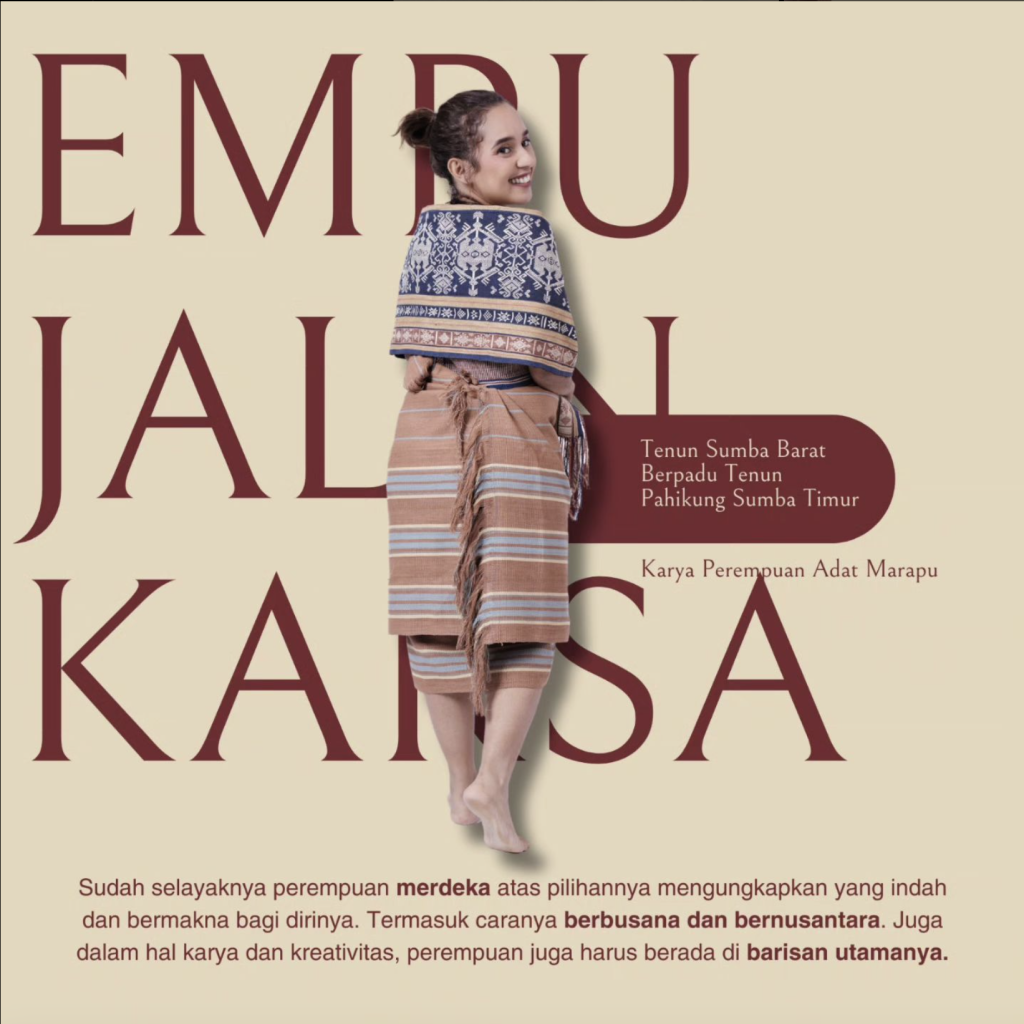
Woven Without Borders — Where Women and Nature Unite
This Sumba woven textile reflects the spirit of women whose aspirations, will, and skills are not defined by external limitations, but by the strength they carry within. Crafted through generations of wisdom and colored with natural dyes from the earth, each thread becomes a testament to the freedom of expression, the beauty of resilience, and the power of creation. At Empu Jalin Karsa, we honor this journey — where women weave not only cloth, but their voices, their stories, and the vivid hues of the archipelago into works that inspire and endure.
Guardian of Dawn — A Symbol of Presence and Protection
This East Sumba woven fabric features a striking chicken motif, a revered symbol of awareness and awakening. Just as the rooster’s crow marks the start of each day, this motif invites us to live with intention and presence. More than ornamental, it speaks to the essence of life itself — the rhythm of renewal, the call to consciousness, and the role of protective leadership within a community. Crafted with care by indigenous women and dyed naturally from the earth, this fabric becomes both a visual statement and a soulful reminder of the values that sustain us.
🔒 These motifs are cultural expressions rooted in community identity. We share them with respect for their origin, and ask that they not be reproduced without community consent.